

Rediscovering Foundations: In Pilates, In Your Life
As we step into March, my attention is turning to foundations, the elements that quietly hold everything else up. In movement, in health, and in life, strong foundations allow us to move with more ease, flow, and confidence. They’re what create that deep sense of being supported from the inside out - like the steadiness you feel when your feet really meet the ground, or when your spine finds that sweet spot of effortless balance.
In the studio, I see again and again that when people reconnect with their foundations, something important shifts. The movement might not look dramatic from the outside, but inside, there’s a different kind of conversation happening. A little more clarity. A little more trust. A little more space to breathe. March is a perfect time to honour that.
What Do I Mean By “Foundations”?
When I talk about foundations at Moving Spirit, I don’t just mean the basics, or beginner work. I mean the underlying relationships that organize your entire body and your whole way of moving through the world.
In Pilates, some of those relationships might be:
- Feet to floor
- Pelvis to spine
- Core to breath
- Eyes and head orientation to the rest of the body
- The rhythm between effort and ease
These relationships don’t switch off once you leave the studio. They’re at play when you’re hiking, riding your bike, playing your favourite sport or standing in the kitchen making dinner after a long day. When these foundations are clear and responsive, everything else works better: your strength, your balance, your coordination, your sense of confidence in your own body.
And here’s the thing: foundations aren’t just physical. The way we organize our bodies is deeply linked to how we feel, how we think, and how we meet our lives. A more grounded foot can be the first step toward a more grounded nervous system. A more supple spine can open the door to more adaptability in the rest of your life.
Why Foundations Matter (More Than Fancy Moves)
It’s easy to assume that progress means doing harder things: more advanced exercises, bigger ranges of motion, more load, more sweat. But over and over, I see that meaningful change often happens when we do the opposite - when we slow down enough to feel what’s already there and refine it.
Some of the benefits I consistently notice when people come back to foundations:
- Pain eases, not because we “fixed” a part, but because the whole body is sharing the load more intelligently.
- Balance improves, especially on uneven ground, trails, or skis, because the feet, hips, and spine are actually talking to each other.
- Breathing becomes more fluid, and with that, people feel more settled, more present, and less “wired.”
- Movement becomes more playful again, instead of feeling like a battle with the body.
From a nervous system perspective, this makes a lot of sense. When we work in a way that is attentive, consistent, and not overwhelming, we give the body a chance to shift out of constant “go mode” and into a more regulated state. That’s where learning happens. That’s where tissues adapt. That’s where patterns can actually change for the long term.
So when we spend time with things like:
- How your heel meets the floor
- How your pelvis supports your spine
- How your breath responds as you move
we’re not “wasting time on basics.” We’re teaching your entire system how to find support, again and again, in lots of different contexts. And that’s what carries you into your activities and into the less physical parts of life too.
Letting the Body Lead the Conversation
One of the reasons I love Pilates, and integrated movement work generally, is that it gives us a way to listen to the body with curiosity rather than judgement. Instead of asking, “What’s wrong with me?” we can ask:
- What happens when I spread my toes and really feel the floor?
- What changes when I let my exhale soften my ribs?
- What do I notice in my jaw, my throat, my eyes when I feel more support underneath me?
These might sound like small questions, but they’re powerful ones. The body stores a lot of our history: our habits, our stresses, our coping strategies. When we give ourselves time and structure to notice, we create space for that history to reorganize a little. Not by forcing anything, but by offering new options, over and over, in a manageable way. We're negotiating with our nervous systems in real time.
On Vancouver's North Shore, many people enjoy lots of physical activities. Our proximity to great outdoor fun is part of the reason many folks live here. They push the edges. They love that feeling of being fully alive in our bodies out in nature. Foundations work doesn’t take away from that. It supports it. A well-organized pelvis might be the difference between finishing a long hike feeling tired-but-good, or finishing it feeling like your back is “angry” for two days. A responsive core and breath can be the difference between bracing on every steep descent, or being able to “surf” the trail with a little more flow.
Foundations Beyond the Studio
The same principles that help you find a more grounded foot or more responsive spine can inform how you live your life more broadly. Foundations in your day might look like:
- Getting enough sleep, so your body can actually adapt to your training and your life.
- Taking a few breaths before you rush into the next thing, so your nervous system has a moment to reset.
- Moving in small, nourishing ways on the days you don’t have time for a “workout.”
- Checking in with how you feel after movement. Not just “Did I work hard?” but “Do I feel more connected, more present?” Does your body feel supported, or depleted?
I think of these as the life equivalent of feet-to-floor, pelvis-to-spine, core-to-breath. They’re not flashy. They’re not Instagrammable. But without them, the more complex parts of life like work, family, caregiving, big adventures and big changes can feel wobbly.
As we age (and I’m very much including myself here), foundations become even more vital. Active ageing isn’t just about keeping up with what we could do at 20 or 30. It’s about building the kind of support, adaptability, and self-awareness that will carry us into the decades ahead with as much freedom and aliveness as possible.
Common Points of Resistance (And Some Gentle Reframes)
Whenever I talk about returning to foundations, I notice some common reactions. Maybe you’ll recognize yourself in one of these.
“I already know the basics. I want to move on.”
I hear you. Foundations can sound like going backwards. But in my experience, every time we revisit them, we meet them as a slightly different person, with a different body, different stresses, different strengths. The work isn’t the same, even if the choreography is.
The invitation: what if “knowing the basics” is not the end of the story, but the beginning of a deeper one?
******************************
“I don’t have time to slow down like that.”
Life is full. Carving out time to move at all can be a challenge. The good news is, foundations don’t only live in hour-long sessions. You can practice them in line at the grocery store, walking up a hill, sitting at your desk, standing at the sink. One clear breath. One grounded foot. One small adjustment to how your ribs stack over your pelvis.
The invitation: what if foundations are something you sprinkle through your day, rather than another item on your to-do list?
******************************
“This mind–body, foundations stuff feels a bit ‘woo’.”
I get that too. The language around mind–body practices can sometimes feel floaty or vague. For me, this work is actually very practical. When your nervous system is more regulated, your balance improves, your coordination improves, and you’re less likely to overreact to every little bump in the road—literal or metaphorical. You don’t have to buy into any particular philosophy to notice that your body moves better and you feel more like yourself when you’re not in constant fight-or-flight.
The invitation: stay curious, and let your own experience be the data.
******************************
March Matness: Celebrating the Power of the Mat
All of this brings us to March Matness, a month when the Pilates world collectively returns to matwork and the original series of exercises that Joseph Pilates created. I love matwork because it strips things down. No springs, no straps, no moving carriage. It's all about you, your body, your breath, and the floor. It’s a beautiful, pared-down way to feel your foundations without a lot of distraction. Throughout March, I invite you to:
- Revisit familiar mat exercises with fresh eyes. What do you notice in your feet, your breath, your spine that you might have skimmed past before?
- Pay attention to how what you explore on the mat shows up later in your day: on the trail, in the pool, on your bike, at your desk.
- Ask yourself, gently: where do my foundations feel strong and supportive right now, and where might a little extra attention invite more ease?
You don’t have to make it perfect. You don’t have to turn it into a project. Just notice. Explore. Give yourself permission to approach the “simple” things as if they were brand new. Need some inspiration? Ask your Pilates teacher for some recommendations!
An Invitation
This March, I’m not asking you to do more. I’m inviting you to go deeper into what’s already there.
To feel your feet on ground: hardwood, carpet, mud, rock, pavement, sand.
To feel your spine respond as you turn look around at the mountains or the water (or the car beside you in traffic).
To feel your breath move through you as you navigate whatever this season is bringing into your life.
In the Pilates studio, we have a safe, structured place to explore those foundations. Outside, we get to live them.
Here’s to rediscovering the beauty and strength of your foundations - in your movement, in your nervous system, and in every part of your life.
__________________________________________________________________________________________________________________________
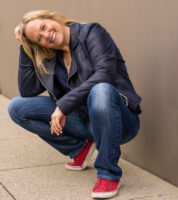
Susannah Steers is a Pilates and Integrated Movement Specialist, and the founder of Moving Spirit Pilates in North Vancouver, BC. She helps people discover strength, freedom, and confidence through better movement. Alongside her studio teaching, Susannah is a sought-after speaker, workshop facilitator, writer, and podcast host — always exploring fresh perspectives on how movement can inspire health, resilience, and meaningful connection.