

When Our Pilates Practice Learns to Play
I have a confession to make. Somewhere along the way, I forgot how to play.
Not the kind of play that you can block off on a schedule - like a tennis game or a yoga class. Not “cross training” or “recovery day” or “light movement.” I mean the kind of play where we lose ourselves in the moment. Where we are not measuring, fixing or improving anything. Where we notice that we are smiling in the middle of a wobble.
It caught me by surprise. I spend my days immersed in movement. All day, I work with people who ski and paddle and ride and hike for fun. I teach Pilates, which I love. And still, there was a quiet moment a few months ago when I realized that I was approaching almost everything in my body like work.
Be better. Be stronger. Be efficient. Be intentional. All important. None of them wrong. But together, without a little mischief and curiosity, they start to close in around us. They can change how we LIVE in our bodies.
Silken Laumann and the Power of Play

Not long after that realization, I found myself thinking again about a conversation I had a while back with Silken Laumann. I interviewed her on my internet radio show “Alive! Bodies in Motion” (before podcasts were a thing), and we talked about her book, “Child’s Play: Rediscovering the Joy of Play in our Families and Communities.” She took her body to the absolute edge as an Olympic rower. She knows discipline and focus at a level that most of us will never touch. And yet, we talked about kids running around the neighbourhood, making up games, and how those wild, loose moments seed resilience and courage for a lifetime.
I remember being struck by the notion that she was not only talking about kids. She was talking about us. Adults with scar tissue and complicated histories. People who have lived through injuries and losses and career changes. People whose nervous systems have learned to keep us “safe” by tightening the reins. Sound familiar?
Play, she said, is one of the ways we learn to trust again. Ourselves. Each other. Our communities.
That stayed with me. Silken Laumann’s thoughts followed me into the studio this year - especially as we explored themes like adaptation and integration. We have been exploring how we can meet change in our bodies with grace, and how we might weave new patterns into old stories. In the middle of those questions, play seems to keep tapping me on the shoulder.
Please don’t get me wrong. When I say play, I am not talking about taking a bunch of crazy risks, or pfaffing about with no direction. It’s not just about blindly pushing harder or performing impressive Pilates feats. For a Pilates practice, I am thinking about this more in the vein of a particular quality of attention.

For me, play feels like this: There is enough structure that I feel safe. I know what the general shape and intention of the movement is. I am clear on my boundaries. I know the difference between effort and threat. And then I give myself permission to explore.
Inside that, something loosens. I stop trying to get it right. I let myself try a slightly different angle, or a different rhythm. I notice how my ribs respond, or how my foot meets the ground. I am curious. When something catches my attention, I run with it and see where it takes me. I might laugh. I notice what feels good. I notice what doesn't. I might totally blow a movement, and then try again. There is no verdict in it. Just play.
What Play Teaches our Nervous System
The science folks would talk about motor learning here. They would say that we learn best when we have variety, feedback and a feeling of safety. They would point out that we remember new patterns more easily when emotion and engagement are present. They would remind us that bodies, especially adult bodies, change most deeply when the nervous system feels invited, not forced.
All of that rings true in the studio. But the reason I care about it is not because of the studies. I care because of what I see in you, and in myself, when play sneaks in.
I think of the moment in class when someone finds balance for a breath or two in a position that used to feel impossible and then bursts out laughing. That laugh is gold. It is the sound of a nervous system updating its story. “Oh. Maybe I am not as stuck as I thought!”
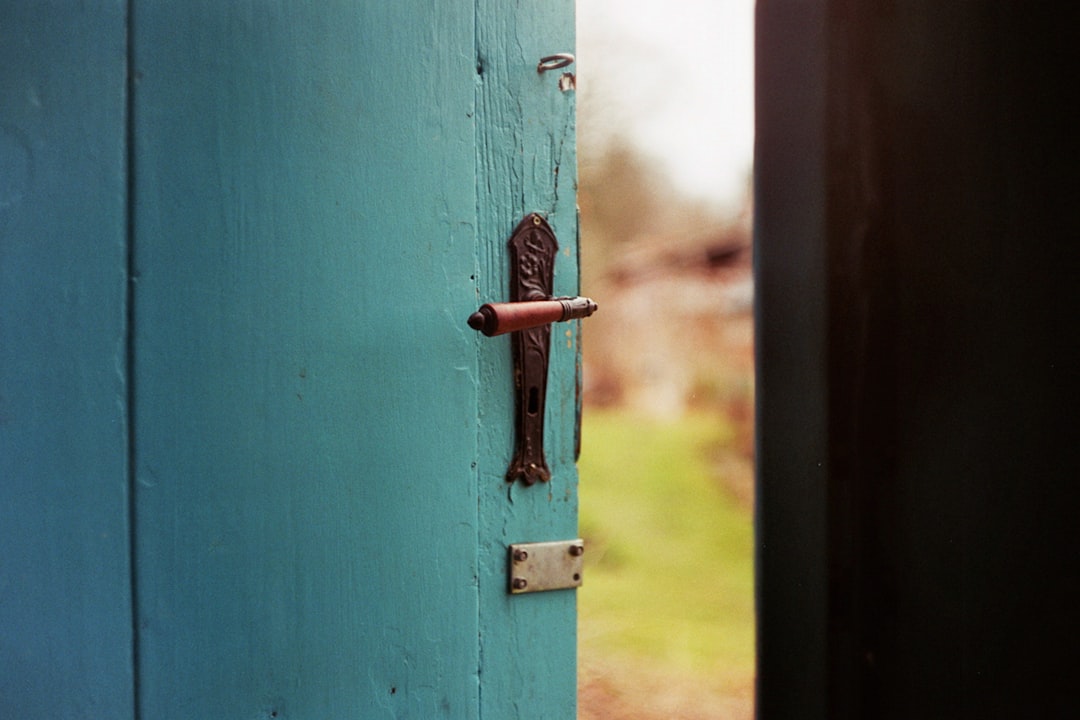
I think of the person who comes in protecting an old injury with everything they have. Over time we build strength and support. We respect the injury. They stay careful - and maybe armoured up. And then one day, they find a way to move around that area that has a little bit of swagger in it. Nothing reckless. Just a tiny bit playful.Like a door opening...
I think of my own body. The old dancer in me who still likes lines and control. A mover with oodles of discipline who knows how to push hard. When I let a spirit of play into my Pilates practice, I notice my breathing change. I am a little less hard on myself. I realize that I am more willing to be and enjoy where I am, instead of where I think I should be. The work loses its weight - and I can enjoy myself a whole lot more.
What could play actually look like in a mindful Pilates practice?
Some days, it might be as simple as giving a familiar exercise a new texture. If we always move through a sequence slowly and precisely, we might try adding a smoother flow and see what happens when we let go of some of the stops and starts. If we often work in small, controlled ranges, we might explore a bit more reach or a gentle spiral, just to see how our systems respond.
Sometimes play is about options. We set up a movement with a clear foundation, then offer two or three possible directions to go from there. None of them are “advanced” or “better.” They are just different. We each choose one, and then maybe we switch. We pay attention to what lights us up and what shuts us down.
Sometimes play is about imagery. Those of us who love Vancouver’s North Shore have no shortage of inspiration here. We might imagine the feeling of paddling across the inlet and let that inform how we move our arms and ribs. We might picture hiking up a familiar trail and sense the way our legs and feet organize to support us. We might remember the quiet weight shift of cross‑country skiing and see how that echoes in our standing work.
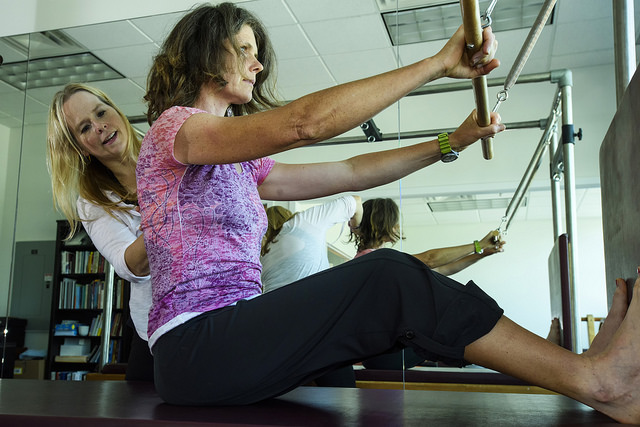
Play can also be quiet. There are days when the nervous system is already charged and wild. On those days, play might look like tiny internal shifts. Can I soften my jaw in this shape? Can I let my breath move into my back? Can I give myself permission to ease up two percent and notice what changes?
All of this still asks something of us. Play is not sloppy. It is not “anything goes.” It is grounded in attention. It is rooted in respect for our bodies and one another. It asks us to stay present and honest. It asks us to listen. It feels to me like a sibling of mindfulness, rather than its opposite. Mindful play.
And it does not have to stay in the studio.
Bringing Play into Grown Up Lives
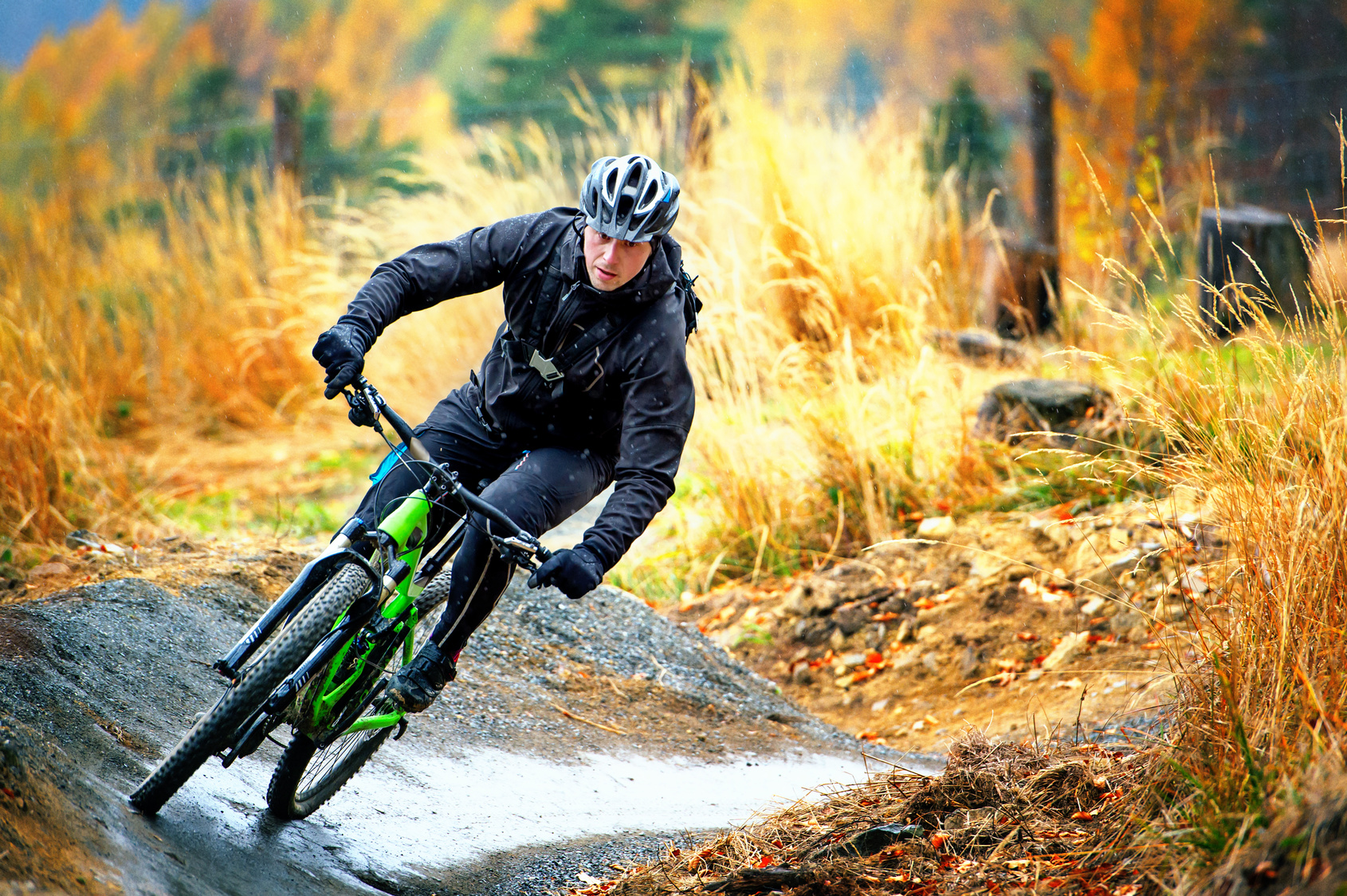
We can bring the same spirit out onto the trails or the water or the golf course. We can leave our watches at home once in a while, or let a walk unfold without counting steps. We can allow a bike ride to include a pause to look out over the view. We can meet a golf shot that goes sideways with curiosity instead of shame. Easier said than done sometimes, I know. But those are playful moves too.
What I love about Silken Laumann’s message is that it is not sugary or sentimental. She has lived through serious things. Her call to reclaim play comes from knowing how hard life can be and still choosing to seek out connection and joy. That feels realistic to me. Grounded. Essential.
As we lean into play as a theme in the studio this month, I am not interested in turning our practice into a circus. I am interested in helping us build the kind of strength and awareness that can hold the weight of our lives. I am interested in a way of moving that leaves room for wonder. For surprise. For the occasional snort of laughter.
Over the next month, what if we let one small corner of our practice be an experiment? Not a test. An experiment. Each time we move - in the studio or out in the world - why not ask ourselves a simple question:
“Where is there room for a little play in this moment?”
Maybe it is in the way we shift our weight. Maybe it is in how we breathe. Maybe it is in our attitude toward the whole thing.
Let's get out and play!!
_______________________________________________________________________________________________________
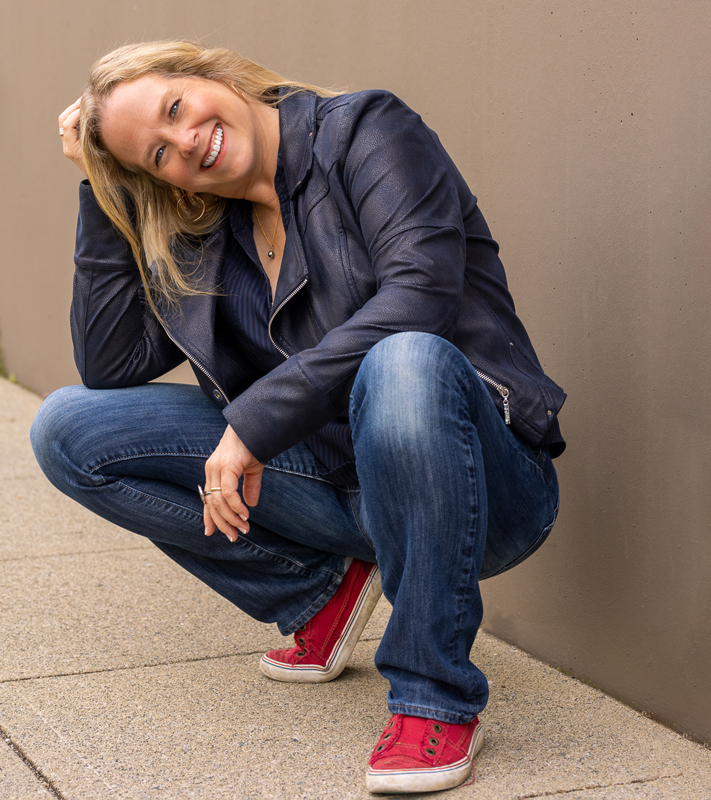
Susannah Steers is a Pilates and Integrated Movement Specialist, and the founder of Moving Spirit Pilates in North Vancouver, BC. She helps people discover strength, freedom, and confidence through better movement. Alongside her studio teaching, Susannah is a sought-after speaker, workshop facilitator, writer, and podcast host — always exploring fresh perspectives on how movement can inspire health, resilience, and meaningful connection.