

Curiosity: The Gateway to Deeper Movement
Over the years, I’ve noticed that something happens in July at the Pilates studio. Bodies seem to arrive differently. Maybe it's the longer days, or the fact that vacation plans have loosened our usual grip on routine, but I notice clients arriving with a little more spring in their step. At this time of year, sometimes people are a little more open to exploring a new exercise, or a new way of doing the same exercise. They may be on board for doing something that might normally be outside their comfort zone. This is curiosity coming alive.
What Curiosity Actually Is
We often think of curiosity as a mental quality, something happening purely in our minds when we wonder or question. But neuroscientist and psychiatrist Dan Siegel describes curiosity as one of the foundational qualities of what he calls "mindsight," which is essentially our ability to perceive and shape our inner mental life. In his book, The Mindful Therapist, Siegel explores how curiosity allows us to approach our own experience with openness rather than judgment, creating what he calls "the foundation for all learning and growth." When we're curious, we're in a receptive state. We're gathering information rather than defending against it.
Brad Stulberg, one of my favourite authors who writes extensively about performance and wellbeing, frames curiosity through a neurobiological lens. Our brains are wired to seek novelty and exploration because curiosity activates reward pathways. When we engage something with genuine interest, we're not just mentally stimulated but we're actually creating conditions for neuroplasticity and learning. This isn't abstract. It's happening in your tissue, in your synapses, every time you wonder "what if I tried this differently?"

Dr. Rob Gray, in his book Learning to Optimize Movement, takes this further into the realm of physical practice. He argues that exploration, driven by curiosity, is essential for movement learning. Traditional models often emphasize repetition and correction, but Gray suggests that when we give ourselves permission to explore variations and possibilities, we discover solutions our bodies already know how to find. Curiosity becomes the engine of optimization.
Last month, Somatic practitioner Wendy MacPherson and I presented a workshop called “Pilates from Within,” offering some context for curiosity inside a movement practice. Our goal was to reveal pathways to more meaningful experiences as we “train” our bodies. Curiosity and presence were at the heart of our program.
Curiosity in the Pilates Studio
To me, summer feels like a time when we mess with the regular order of things, like we have a little more permission to experiment. When we step onto the reformer or the mat in July, maybe there’s a little more freedom to play. There's space to wonder: what would happen if I initiated this movement from a different place? What does it feel like to slow this transition down, or speed it up? What if I closed my eyes during this familiar exercise?
These aren't frivolous questions. They're invitations into what Siegel calls the "receptive awareness" that allows us to observe our patterns without immediately trying to fix them. When a client tells me their shoulder always feels tight during a particular sequence, I might say: “let’s get curious about that tightness. Where does it start? Does it feel the same every time, or are there variations? What happens if you back off the range of motion by ten percent?”

This shifts the entire experience. We move from "there's something wrong I need to correct" to "there's something interesting I want to understand." The nervous system responds completely differently to those two orientations. One creates bracing and effort. The other creates openness and possibility.
In my own practice, curiosity has taught me more than any correction ever could. I spent years trying to “fix” some persistent movement issues - not sure from where they were originating. I went down a deep rabbit hole, seeking professional treatment and support, and then using my own movement practice as a way to “fix” the problem. I kept swirling around the problem, never really finding a solution that stuck. Then one day I just got deeply curious instead: "what is available for me today, even if my movement feels “less than” I would like it to? What does my breath want to do when I'm not managing it? What happens if I explore how one leg moves, how the other leg moves - and what’s different when they move together? What can I sense about how my feet and hips respond? What can my body tell me when my head doesn't get in the way?" That exploration, that permission to investigate rather than control, (this part was hard for the Type-A control-freak in me!) led to an embodied understanding that all my striving never touched.
The Physical and Mental Gifts
When we bring curiosity into how we move, we're building both physical capacity and psychological flexibility. Physically, exploration helps us find new movement strategies, discover strength in ranges we've been avoiding, and integrate parts of ourselves we've been bracing against. Gray's work emphasizes that the process of searching for solutions through varied practice creates more adaptable, resilient movement patterns than simply drilling the "correct" form.

Mentally and emotionally, curiosity offers us something equally valuable. It interrupts our habitual stories about what we can and can't do. Siegel writes about how mindsight, anchored in curiosity, allows us to become aware of our mental patterns without being controlled by them. When we approach our movement practice with genuine interest, we create a little space between stimulus and response, between what we've always done and what we might discover.
This is the gift summer offers - a new rhythm that invites us to step outside the grooves we've worn smooth. And when we return to the studio, to the same reformer we've been on a hundred times, we might find we've brought that exploratory spirit with us.
Moving Forward
I don't have a prescription for how to be more curious. That would rather miss the point. But I do think it's worth noticing where we've stopped wondering. Where have we decided we already know? Where do we move through our practice, or our day, on autopilot?
The invitation is simply to ask. To wonder. To approach the next footwork series, the next walk around the neighborhood, the next moment of sensation in your body, as if you're meeting it for the first time. Because in many ways, you are. Your body today is not the same body as yesterday. The conditions are different. The possibilities are different. Bring a beginner's mind to the task.
Curiosity doesn't demand that we change anything. It just asks that we pay attention with interest rather than judgment, with wonder rather than evaluation. And often, that's exactly the condition under which real change becomes possible.
So this summer, when you feel that little spark of "I wonder what would happen if," follow it. See where it leads. Your body already knows so much. Curiosity is how we listen.
_______________________________________________________________________________________________________
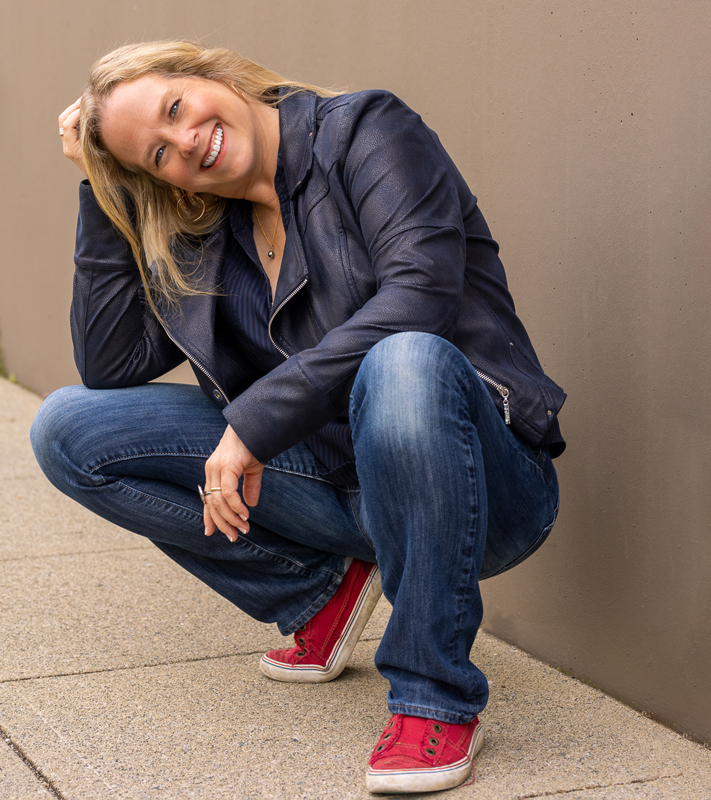
Susannah Steers is a Pilates and Integrated Movement Specialist, and the founder of Moving Spirit Pilates in North Vancouver, BC. She helps people discover strength, freedom, and confidence through better movement. Alongside her studio teaching, Susannah is a sought-after speaker, workshop facilitator, writer, and podcast host — always exploring fresh perspectives on how movement can inspire health, resilience, and meaningful connection.