

Finding Ease In Hardworking Bodies
Ease is not about opting out, slacking off, or taking the easy way out. It is about finding a way of working, moving, and living that is sustainable, integrated, and deeply supportive - from the studio to the trails, from your mat to your everyday life.
What Ease Is (And What It Isn’t)
When I talk about ease, I don’t mean a life free of effort, challenge, or sweat. I mean the quality that shows up when effort is organized, when breath has somewhere to go, when your body, mind, and heart are moving in the same direction.
Ease is not:
- Being lazy.
- Numbing out.
- Always choosing comfort over growth.
Ease is:
- Working in a way that your system can actually support.
- Using just enough effort, in the right places.
- Allowing support—gravity, breath, structure, and community—to share the load.
Brad Stulberg (one of my fave writers on the subject of performance and excellence) talks about “sustainable excellence” in motion. Where effort is not a heroic, all‑out push, but consistent, grounded practice that you can come back to day after day. (Check out his latest book: The Way of Excellence: A Guide to True Excellence and Deep Satisfaction in a Chaotic World.)
Ease Inside Your Pilates Practice
In Pilates, ease is not the absence of work. If you’ve been in the studio lately, you know that. It’s the feeling that the work is directed, connected, and supported, instead of scattered and tense. A few places you might notice this:
- Breath as support
Instead of “taking a big breath because you should,” feel how breath shapes your movement. Notice how an exhale can help you deepen into your abdominals, how an inhale can open space around your ribs and shoulders. - Bones carry, muscles respond
Bonnie Bainbridge Cohen is a respected movement educator and founder of Bodymind Centering, an embodied approach to movement, body and consciousness.She often speaks to the idea that free movement is less about sheer range of motion and more about ease of motion. She talks about how the bones support, and other tissues organize around that support. In Pilates, that might look like letting your pelvis truly rest on the carriage, or feeling your feet meet the footbar in a way that gives your whole body something solid on which to stand. - Effort in the right places
Instead of gripping everything just in case, you begin to refine your approach. You can be strong where you need to be, soft where you can let go a little. In a simple bridge, that might mean the back of your legs working clearly while your neck and jaw stay quiet. The work is still there, but the overwork and struggle eases.
In class, we'll often invite you to do less, but to do it with clearer intention. That isn’t code for slacking off. It’s an invitation to sharpen your attention so your effort has impact, rather than just intensity.
Playing With Ease During Class
If you’d like to explore ease more deliberately in your sessions, you might try:
- Asking: “What can soften?”
In any exercise, scan for one place—jaw, shoulders, toes—that could let go by even 5%. The movement doesn’t get smaller; it often gets more precise. - Asking: “Where do I feel supported?”
Notice what’s on the mat, the carriage, the box. Let the contact points hold more of you. When you allow the equipment and the floor to help, your deep support systems can kick in more effectively. - Asking: “Is my breath helping or fighting me?”
If you’re holding your breath, see what happens when you simply let it move. No fancy pattern, just noticing where breath flows easily and where it stops.
These small experiments train your nervous system to recognize that ease and effort can coexist. You can work hard without hardening.
Ease In Your Active Life Outdoors
The same principles apply in your physical activities out in the world too: on your bike, on a hike, on skis, on the golf course or jumping into your favourite Type 2 fun. Ease doesn’t mean you never tackle the steep trail or the hard workout. It means you approach those challenges in a way your body and mind can sustain. Imagine:
- You’re running along your favourite trail, and instead of charging through tight shoulders and clenched fists, you let your arms swing from an easy shoulder girdle over a stable spine and rib cage, your hands soften, and your breath find a steady rhythm. Same distance, same pace, but a very different internal experience.
- You’re paddling your SUP on a choppy day. You could fight the water with your neck and shoulders, or you could let your legs and pelvis feel the board, allow your spine to adapt to the waves, and let your arms connect down through your trunk. The work is still there, but you’re working with the environment, not against it.
This is where ease becomes a performance tool. When your system isn’t clogged with unnecessary tension, you have more energy for the things that matter: power, responsiveness, joy. Stress plus appropriate rest equals growth; struggle without ease is just wear and tear.
Ease Beyond Movement: In Daily Life
Ease is not just a movement quality; it’s a way of relating to your life. Brad Stulberg talks about rootedness—living from clear values, with presence and patience, instead of chasing intensity for its own sake. That shows up in very ordinary ways:
- Choosing one or two priorities for the day instead of trying to conquer a to‑do list that would exhaust three people.
- Taking ten slow breaths in your car before you walk into a difficult meeting or appointment.
- Allowing a quiet evening to actually be quiet, instead of filling every moment with a screen or a scroll.
Ease here does not mean doing nothing. It means doing what matters in a way that you can keep doing, over months and years, without burning yourself out. Quiet, intentional, consistency.
The Difference Between Ease and “Taking the Easy Way Out”
This distinction matters. “Taking the easy way out” often means avoiding discomfort that would actually help you grow. Stuff like skipping the rehab work your back needs, bailing on a hard conversation, or choosing the couch when what you really crave is a walk outside. Ease, on the other hand, might look like:
- Showing up to your session even when you’re tired, and letting the workout adjust to your capacity that day.
- Doing your strengthening program in smaller, consistent bites instead of one big heroic session once every two weeks.
- Having the hard conversation, but taking a moment beforehand to feel your feet on the floor and your breath in your ribs so you can stay present.
One is avoidance; the other is alignment. Ease supports you in doing the work. It doesn’t replace the work.
Simple Ways to Explore Ease This Month
If you’d like to play with this theme—in the studio and beyond—here are a few grounded experiments:
- In Pilates
- Choose one exercise each session to be your “ease laboratory.” Ask where you can soften, where you feel supported, and how your breath can help.
- After class, take 30 seconds to notice how you feel. Not “good” or “bad,” but: lighter, heavier, more organized, more grounded? That reflection helps your system learn what ease feels like, so you can find it again. (The final series of legwork in your reformer program is a great place to do this!)
- In your favourite activity
- On your next hike, ride, ski, or golf game, spend five minutes paying attention to one relationship: feet to ground, sit bones to saddle, hands to poles or golf club. Let that contact be your anchor, and see if anything in your system settles.
- Notice the moment your effort starts to feel like struggle. Could a small adjustment—slowing your pace, softening your jaw, feeling your ribs move with your breath—change that experience without stopping altogether?
- In daily life
- Once a day, pause and ask: “What’s one small thing I can ease right now?” It might be unclenching your teeth, putting both feet on the floor, or taking one task off your list.
- Protect one small pocket of genuine rest each week: a quiet coffee, a walk without your phone, a few minutes lying on the floor and breathing. This is not indulgence; it’s part of the growth equation.
An Invitation
February’s theme at Moving Spirit is an invitation, not an assignment. It’s an opportunity to get curious about what happens when you stop equating struggle with virtue, and start exploring how ease might actually deepen your strength, resilience, and joy in movement.
In the studio, on the trails, in your home and at your desk, I invite you to soften into structure, breathe into effort, and let clarity, not chaos, set your rhythm. Let’s keep practicing together: doing the real work, in a way that supports the long game of a strong, connected, deeply lived life.
__________________________________________________________________________________________________________________________
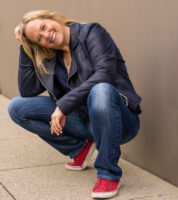
Susannah Steers is a Pilates and Integrated Movement Specialist, and the founder of Moving Spirit Pilates in North Vancouver, BC. She helps people discover strength, freedom, and confidence through better movement. Alongside her studio teaching, Susannah is a sought-after speaker, workshop facilitator, writer, and podcast host — always exploring fresh perspectives on how movement can inspire health, resilience, and meaningful connection.