

A Place to Begin
Before we ask the body to do more, it might be interesting to start with a slightly different question.
What is already here to meet us?
In Pilates, there are many places to look for an answer. Your feet meet the footbar. Your hands connect to the mat. The back of your ribs rest against the reformer carriage. Your pelvis meets the floor. These points of contact can seem almost too ordinary to notice. It's easy to move past them quickly, eager to begin the exercise, find the shape, reach for strength, or simply keep up with the rhythm of the class.
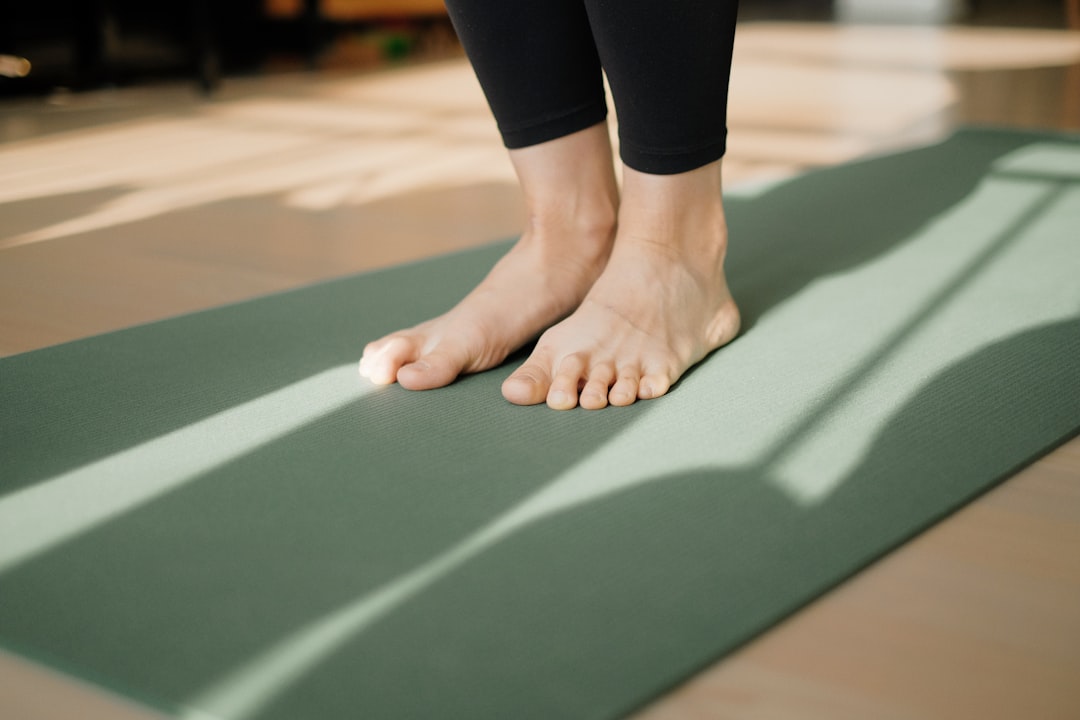
What if the surface beneath us is more than just where we start? What if how we meet that surface is actually part of the movement itself?
When we take a moment to feel where we are being supported, the work can become clearer. The body has more information. We might notice that one foot feels more present than the other, that we are gripping with our toes, or that our shoulders have quietly taken on a job that belongs elsewhere. None of this is a problem to solve immediately. It is simply useful information that gives us a tangible place to start.
In a Pilates class, that might mean pausing for a moment before footwork to feel the heel, the base of the big toe and the outer edge of each foot against the bar. Not trying to make the pressure perfectly even. Not forcing the arches to lift or the legs to line up in an ideal way. Simply observing the details that are already there.
As the carriage begins to move, we can stay with that inquiry. Can the feet receive the footbar as well as press into it? Can we feel the spring respond, not as something to overpower, but as something that gives us feedback? Where do we notice that work lands in our bodies as we progress through full range of motion?
The same conversation appears when our hands are on the mat. When we're kneeling on all fours, it is easy to assume we're just holding ourselves up. We might brace through the arms, tighten through the chest, or pull the shoulders away from the ears with great determination. But what happens if we let the hands receive some weight first? What if the mat is not simply beneath the palms, but something we can meet?
A gentle press into the floor can create a response through the arms, the ribs and the upper back. That small shift creates a little yin and yang in the whole system. The body begins to organize itself in a new way around contact. Maybe a little more space opens up across the collarbones. A little more room for breath might appear. The lumbar spine might discover that it does not have to manage every part of the task.
We're not looking to become heavy, fixed or perfectly still in any one place. We're not asking the body to push harder into the floor, or to become rigid in the name of stability. In fact, the the opposite is probably true. When we can feel the support well, we may no longer need to "hold on" quite so tightly.
The floor meets us when we stand. The footbar meets us when we press into it. The mat meets us when we lie down, roll, reach or bear weight through our hands. The carriage receives us and the springs answer our effort. This exchange gives the body something to work with. In biomechanical terms, the ground responds to the force we place into it, and that response is what helps make movement possible. Every step, reach, rise, push and pull begins with some version of this conversation.

When we're in the studio, we have the opportunity to explore that conversation more fully.
Before we stand up from the reformer, we can notice the feeling of both feet on the floor. We can sense the mat beneath the back of the ribs before lifting into a bridge. We can place a hand on the pedal of the WundaChair and notice whether the pressure travels into the arm and back, or whether it disappears into a familiar tightening around the neck. We can let one foot receive our weight before asking the other leg to step forward.
These are small moments, but they change the quality of the work. The exercise may look much the same from the outside, and feel entirely different from within.
Our bodies are hard wired to create stability and support in whatever way they can. When our contact with the ground is vague, we typically look for certainty somewhere else. We grip. We brace. We rush. We try to create stability by doing more. Those strategies do not always create the desired effect. When we can feel and trust the floor beneath us though, new possibilities often become more available.
Why not listen first? Then we can choose to use only the effort the task requires. Support is not a binary that we either do, or do not, have. It is a relationship. Like any relationship, it deepens when we're present and paying attention.
This is where ideas we have been exploring in recent months - like curiosity, play, and creativity - begin to find home in the body.

Curiosity becomes more than a good intention. It might be the willingness to notice what changes when you place a little more attention in the heel, or when you allow the ribs to rotate as an arm reaches. It might be asking whether there is another way to stand, another way to press, another way to balance, another way to get into an exercise you have done many times before.
Play becomes possible when we are not spending all of our energy trying to get it right. It can be the quiet play of testing a different pathway, changing the timing, exploring a smaller movement before a larger one, or allowing yourself to wobble long enough to learn something from it.
Creativity, too, has a physical beginning. It asks us to be responsive rather than automatic. When we can sense our relationship to the floor, the footbar, the springs or the mat, we have more choices. We can meet resistance without fighting it. We can adjust before we have gone too far. We can let a familiar movement reveal something new.
Perhaps this is part of what Pilates offers us beyond the studio. It is not a collection of positions to recreate in daily life, nor is it a promise that we will always feel steady. Life is rarely that predictable. A trail changes beneath our feet. A set of stairs asks us to move weight quickly and in a directed way. Groceries pull us to one side. Everyday, we reach, turn, carry, climb, catch ourselves and begin again.
The question is not whether we can hold a perfect shape through all of it. The question is whether we can sense what is supporting us, receive the information available, and respond with enough clarity to keep moving.

You might try this on your next walk. Rather than trying to walk in a particular way, notice the moment one foot receives your weight. Feel the ground meet you. Notice the transfer through that foot, and then to the other side. Let the terrain you're on be part of the experience. If the path changes, see how and where your body changes with it.
In the studio, the footbar stays put. The springs respond. The mat provides the ground that keeps the working body very honest. These reliable conditions give us a place to practice noticing, receiving and responding. Over time, that practice can travel with us. Not as a rule to follow, but as a capacity we can return to when life asks us to move through something unfamiliar.
The ground is not there to hold us still.
It is there to give us somewhere to begin.
______________________________________________________________
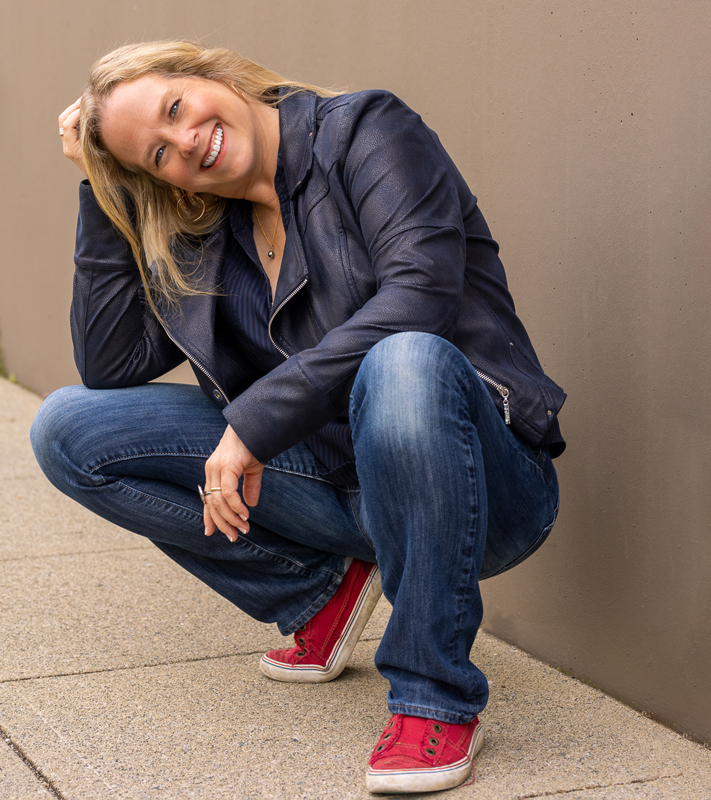
Susannah Steers is a Pilates and Integrated Movement Specialist, and the founder of Moving Spirit Pilates in North Vancouver, BC. She helps people discover strength, freedom, and confidence through better movement. Alongside her studio teaching, Susannah is a sought-after speaker, workshop facilitator, writer, and podcast host — always exploring fresh perspectives on how movement can inspire health, resilience, and meaningful connection. She is an educator, and mentor for early career stage Pilates teachers and studio owners.